Driving towards Success
Why Low Vision Made Me Sit Too Long, And How I Relieved My Hip Pain Naturally
Living with low vision can lead to sitting too long without realizing it, causing hip pain and discomfort. In this personal story, learn how simple changes like standing, movement, and dictation helped relieve hip pain naturally and support overall wellness.
Anita Keith-Foust | Blind Girl Driving™
3/18/20262 min read
My post content
I learned something the hard way.
I didn’t sit for too long because I was lazy.
I was sitting because I was trying to see.
As someone who has gone from blindness to low vision, I depend on my eyesight. I use it intentionally because I believe:
“If you don’t use it, you lose it.”
So I would sit in front of a screen, focusing deeply… and not realizing how long I had been there, until my hip reminded me.
The Hidden Problem with Low Vision and Sitting
Low vision doesn’t just affect how we see.
It affects how long we sit.
When you are visually challenged, you may:
stay seated longer to focus
lean in closer to screens
lose track of time while concentrating
You are not being lazy.
You are adapting.
But your body still feels the effects.
What Happened to Me
The pain returned in my hip.
Not because something was seriously wrong,
but because I had been sitting too long.
The truth?
I already knew what worked.
I had done simple movements before—and the pain went away. But I stopped.
And the pain came back.
The Shift That Changed Everything
I made a simple decision.
I stopped depending only on sitting to work.
Instead, I began to:
stand while working
move more throughout the day
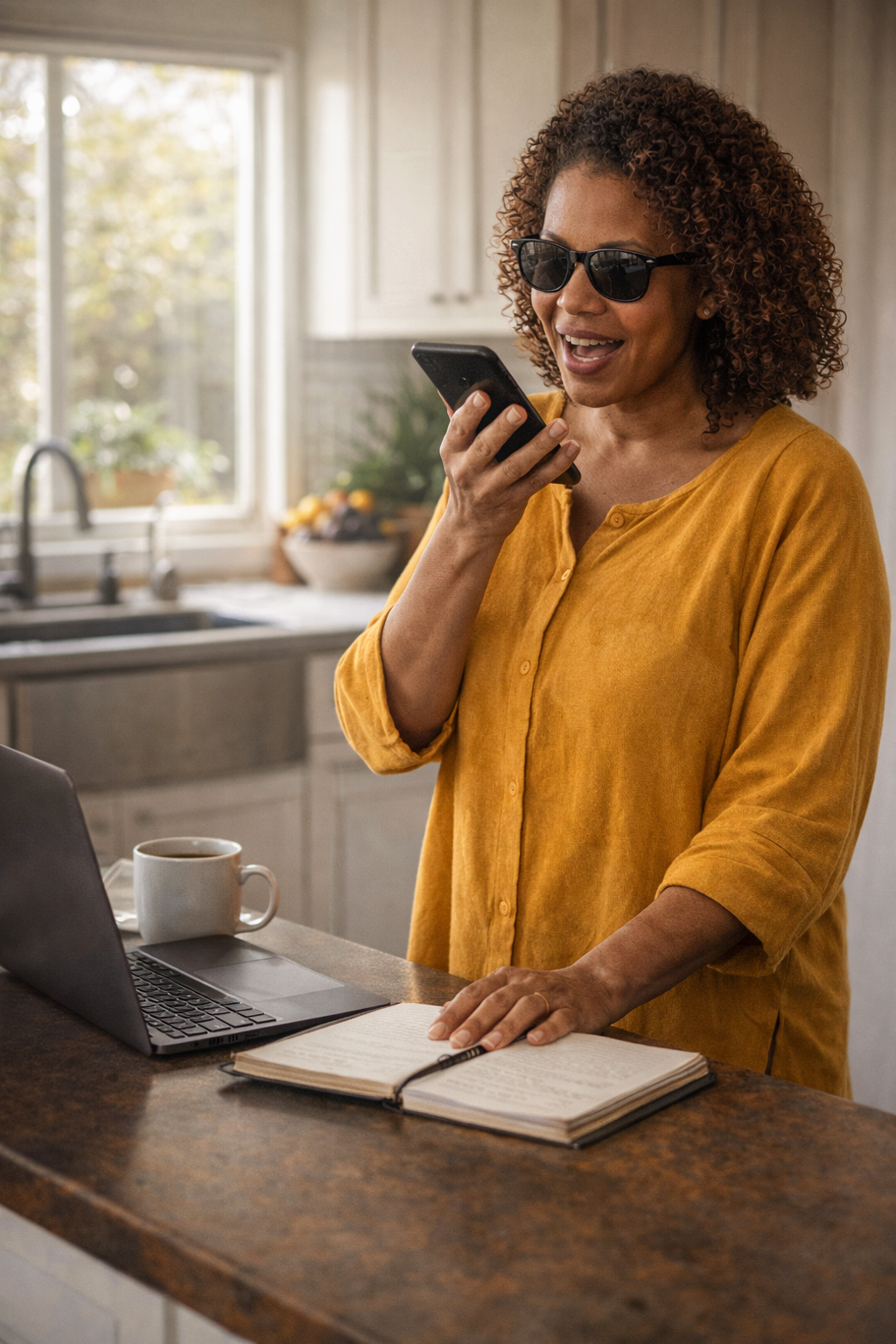
use dictation instead of staring at a screen
I realized I could still be productive
without being stuck in a chair.
Using Dictation to Stay Mobile
One of the most helpful tools for me is dictation.
Instead of sitting and straining my eyes, I can:
speak my thoughts
create content
stay standing or moving
Then I clean things up afterward.
This allows me to protect my eyesight
without sacrificing productivity.
An Unexpected Benefit: Sunlight
By changing how and where I worked, I gained something else.
Sunlight.
Standing and working near natural light helped me:
move more
feel better physically
support my overall wellness
A Simple Way to Think About It
If you are visually challenged:
You are not doing anything wrong
You are using what you have
But your body still needs movement
The goal is not to stop using your vision.
The goal is to support your whole body while you use it.
What I Do Now
Now I return to what works:
I avoid sitting for long periods
I use standing spaces in my home
I dictate instead of straining my eyes
I keep my body moving
When I do this, the pain goes away.
You Don’t Have to Figure This Out Alone
If this sounds familiar, I want you to know something:
You don’t have to keep guessing your way through this.
I’ve lived it.
I’ve adjusted.
And I’ve found simple, practical ways to stay mobile and independent.
A Simple Next Step
If you’d like personal guidance, I offer a 15-minute call for $25 where we can talk through:
what you’re experiencing
what’s working (and what’s not)
simple changes you can start right away
This is not complicated.
It’s a real conversation, based on lived experience.
Book your call here: email me to schedule:
Include 3 possible days and times that work for you.
Once we agree on the date and time, use the following payment link: https://buy.stripe.com/00w4gteYU9B03Pj5en8Ra01
I didn’t lose my progress.
I just needed to return to what worked.
And sometimes, that’s all we need to do.
Disclaimer
This content is for informational and educational purposes only and is not medical advice. It is based on personal experience and should not be used as a substitute for professional medical guidance, diagnosis, or treatment. Always consult a qualified healthcare provider regarding any medical concerns or conditions.
© 2026 Under Grace, LLC. All rights reserved.